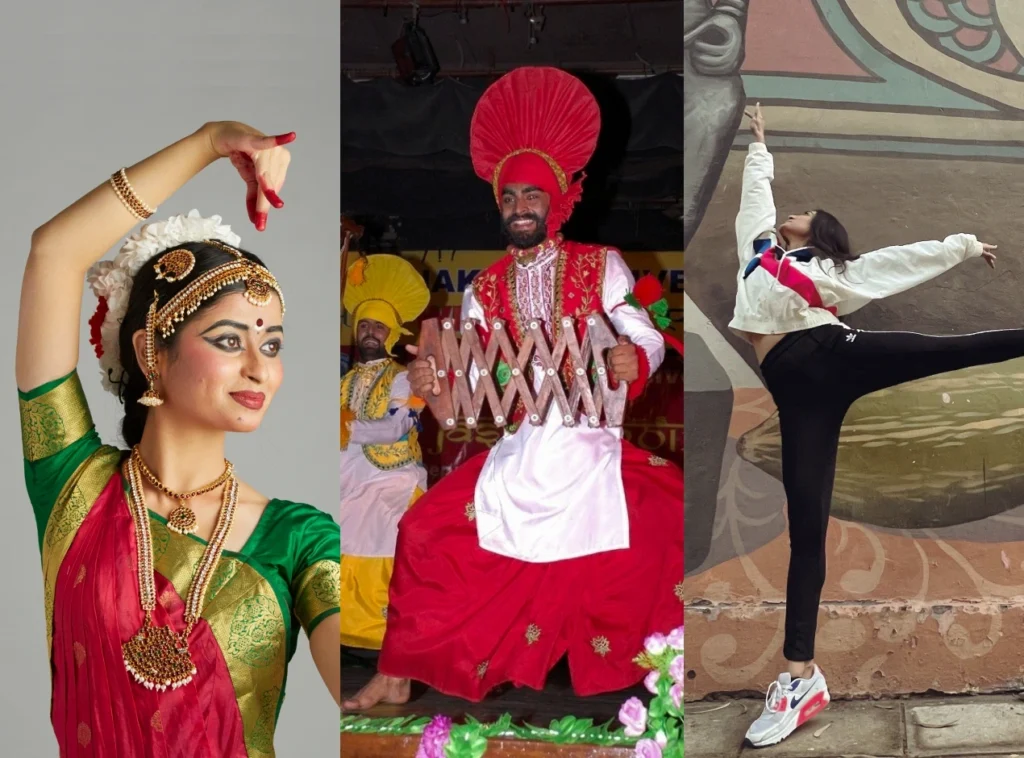
India’s cultural story is made up of many moving parts, where every movement and gesture carries a deep meaning about history, feelings, and new ideas. At the center of this lively story are Indian dance styles, which have amazed people for many centuries. These dances can be found in ancient temple rituals as well as modern stage performances, showing the spirit of the country. However, as the world becomes more connected, there has been a big change: traditional and modern dance styles are now meeting and mixing in new and interesting ways.
In this blog, we look at the differences between traditional and contemporary Indian dance, showing how old traditions and new creative ideas come together.
Whether you’re someone who loves dancing and wants to know more about contemporary dance or you’re new to Indian classical dances, this guide will help you understand the details. We’ll explore the beginnings, examples, and the unique skills that make contemporary Indian dance a link between the past and the present. By the end, you’ll see why understanding the differences between traditional and contemporary Indian dance styles is more than just about movement, it’s about a living and changing heritage.
Understanding Classical Dance Forms of India
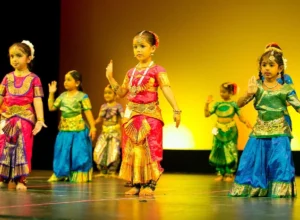
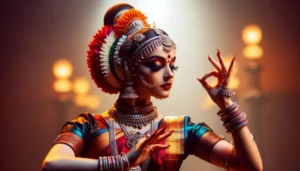
Classical dance forms from India are celebrated as masterpieces of art, acknowledged by the Sangeet Natak Akademi for their intense training and deep spiritual meaning. These styles come from an old Indian text called Natya Shastra, written by the sage Bharata Muni around 200 BCE to 200 CE. They focus on three main aspects: nritta, which is pure dance movement; nritya, which includes expressive storytelling through movement; and natya, which involves dramatic elements. The beauty of these dances isn’t just shown on stage, it’s felt in every detail. Each hand gesture, known as a mudra, and each facial expression, called abhinaya, tells a story filled with myth and emotion.
Classical Dance Forms of India and Their Origins
Classical dance forms of India are celebrated for their artistic brilliance and are acknowledged by the Sangeet Natak Akademi for their strict training and deep spiritual meaning. These dance styles come from the ancient Natya Shastra, a text written by sage Bharata Muni around 200 BCE to 200 CE. The roots of these dances lie in temple traditions, where temple dancers called devadasis passed down sacred stories through graceful movements. Kathak, which began in the Mughal courts of northern India, developed from storytellers who used rhythmic footwork and spinning movements to narrate stories of Lord Krishna. In the south, Bharatanatyam originated in the temples of Tamil Nadu, specifically the Chidambaram temple, where its structured patterns and powerful solo dances symbolize the balance of the universe.
Odissi, from the state of Odisha, is inspired by the sculptures of the Sun Temple at Konark, where the three-bend posture, called tribhanga, imitates the smooth curves of stone deities.
Manipuri, which comes from Manipur’s Vaishnavite culture, combines gentle movements with martial elements, while Kuchipudi from Andhra Pradesh brings drama to life through male performers who portray characters like Satyabhama. Mohiniyattam, known as the “dance of the enchantress” from Kerala, expresses feminine grace, inspired by Mohini, the female incarnation of Vishnu. These classical dance forms and their origins are not fixed; they have changed over time, especially during the colonial period. Gurus like Rukmini Devi Arundale played a key role in the 20th century in reviving Bharatanatyam and restoring its original form after colonial influences changed it.
Moving from these traditional bases, one might wonder how such structured art forms can fit into more free and expressive styles.
However, while tradition provides the foundation, modern interpretations bring a unique personal touch. These dance forms include three main styles: nritta, which is pure movement without expression; nritya, which combines expression with movement; and natya, which involves dramatic storytelling. Grace is not just shown; it is felt through every hand gesture and facial expression, which together tell deep stories from mythology and express strong emotions.
Examples of Traditional and Contemporary Indian Dance
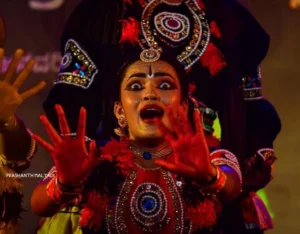
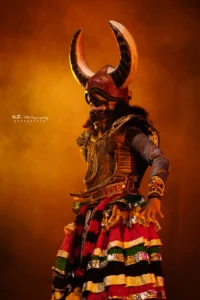
Among the many traditional and modern Indian dances, Kathakali from Kerala is a great example of how classical forms can be dramatic. Dancers wear masks and perform stories from the Mahabharata with big eye movements and strong footwork. Their colorful clothes stand out even under oil lamps. However, there are also modern changes, such as performances that use myths to talk about environmental issues like climate change.
These Indian dance styles rely a lot on discipline, with dancers spending many years practicing under a teacher’s guidance.
But what makes them special is their ability to connect with people from all over the world. For instance, a Bharatanatyam performance can take viewers on a journey through the story of the ocean being churned (Samudra Manthan), where gods and demons pull on a cosmic rope. This story is brought to life through the dancer’s curved back and delicate finger movements.
What is Contemporary Dance: Decoding the Contemporary Dance Meaning
What is contemporary dance? At its core, contemporary dance goes beyond strict choreography to include personal stories, spontaneous movement, and combining different art forms. It started around the middle of the 20th century worldwide as a way to break away from the strict rules of ballet. Instead of focusing on perfect technique or standing on tiptoe, it values feelings, movement on the floor, and teamwork over a strict chain of command. In India, contemporary dance came through Western influences after the country gained independence, and it mixed with local traditions to create a unique form of contemporary Indian dance.
Evolution of Contemporary Indian Dance
The development of modern Indian dance reflects the country’s struggle and revival after colonial rule. In the 1970s, artists like Astad Deboo combined the exactness of Kathak with modern movements, creating performances that were barefoot and symbolized the feeling of being out of place in cities. By the 1990s, groups like Nrityagram, led by Surupa Sen, transformed Odissi dance with simple stage designs and roles that didn’t stick to traditional gender roles, questioning strict societal norms.
Nowadays, events like the Khajuraho Dance Festival mix old classical performances with new, modern pieces, where bright lights and electronic music create a vibrant atmosphere.
This change isn’t about losing tradition, it’s about having a conversation between past and present. Contemporary dance in India often uses spoken words, video screens, and even social media to reach more people, making the art both easy to understand and deep in meaning. For example, Mandeep Raikhy’s work “In Plain Sight” from 2020 explores the history of queer people through broken movements, which is very different from the traditional temple settings of old.
But this change brings up some important questions: Does having more freedom take away from the original essence of the dance?
As we continue to look into this, it’s clear that contemporary dance in India respects its roots while also looking toward the future.
Examples of Traditional and Contemporary Indian Dance Forms
Looking closer at examples of traditional and modern Indian dance, we can explore the work of Shobana Jeyasingh, who blends the structured geometry of Bharatanatyam with the stark simplicity of Butoh. Her Duet series twists the body into unusual shapes, reflecting the emotional and physical strains of migration. At the same time, groups like Gati Dance Forum in Delhi offer spaces where artists such as Aishika Chakraborty combine the spinning movements of Kuchipudi with hip-hop beats, creating a fresh and powerful fusion.
These dance styles are now showing up in city studios and on global stages, from London’s Sadler’s Wells to New York’s Joyce Theater.
A single performance might mix Sufi spins with contact improvisation, leaving people deeply moved and breathless.
Difference Between Traditional and Contemporary Indian Dance
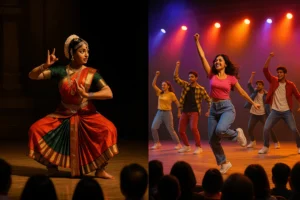
The main difference between traditional and modern Indian dance is not just in how they look, but also in their underlying ideas. Traditional dances are based on strict guidelines from ancient texts, where each movement follows a specific order that reflects the universe’s structure. On the other hand, modern dance is more flexible and often comes from personal experiences like emotional pain or comments on society. However, both types of dance carry a deep sense of devotion, even though they show it in different ways.
Traditional vs Contemporary Indian Dance Styles Explained
Traditional and modern Indian dance styles show clear differences in how they’re structured. Classical forms require strict rhythms called talas and specific melodies called ragas. Dancers wear elegant silks and jewelry, often portraying divine figures. Training for these styles can take many years and is usually passed down through generations in a teacher-student relationship known as guru-shishya parampara.
On the other hand, modern dance styles prefer casual clothing like sneakers and streetwear.
The music mixes traditional Carnatic violin with modern techno beats. Dancers often improvise, responding to live music or the mood of the audience.
Classical dances often tell ancient tales like Rama’s journey, encouraging deep reflection on values and morality. Modern performances explore more modern issues like caste-based violence in Mallika Sarabhai’s piece Shakti or the effects of partition in Daksha Shekhar’s solo work. This change keeps Indian dance styles alive and meaningful for young people around the world who look for cultural connections on platforms like Instagram.
How Contemporary Dance is Different from Classical Dance in India
How contemporary dance differs from classical dance in India mainly comes down to accessibility and innovation. Classical dance training is usually exclusive, often requiring students to live in specialized gurukuls and have financial means. On the other hand, contemporary dance workshops are more open to everyone, especially with the help of online platforms. The idea of an ideal body also changes: classical dance focuses on long, symmetrical lines, while contemporary dance embraces a wider range of body types, including plus-size performers and those with disabilities.
Staging also changes performances from traditional temple stages to more modern black-box theaters.
However, there are also connections between the two: contemporary artists like Anita Ratnam blend traditional styles with new influences, as seen in her work “India Africa Rhythms,” which mixes Mohiniyattam with African percussion. This shows that boundaries between classical and contemporary dance are not fixed. Instead, contemporary Indian dance helps keep classical dance alive and evolving, rather than replacing it.
Blending Traditions: The Future of Indian Dance Styles
As Indian dance styles keep changing, fusion has become the usual way of doing things. Places like the Attakkalari Centre for Movement Arts in Bengaluru teach both traditional and modern styles, helping choreographers mix tillana rhythms with the quiet movements of Butoh. Around the world, dancers like Akram Khan are redefining Kathak on big stages in places like Covent Garden, combining it with contemporary styles to tell stories about climate change and displacement.
This mixing of styles makes dance more welcoming, especially for younger generations, who are now joining dance studios where virtual reality helps improve their expressive movements.
Even though there are challenges, like funding mostly going to classical forms, there is still a lot of hope. Contemporary Indian dance isn’t a threat to tradition, it actually helps keep it alive and growing in a changing world.
Conclusion
From the old temple bells to the loud beats of modern music, Indian dance styles show strength and the ability to change with time. We’ve explored the classical dance forms of India, explained what contemporary dance is, and discussed how traditional and contemporary Indian dance are different. In the end, whether it’s a Kathak dance piece or a modern solo, the core idea stays the same: movement is like meditation, and stories can save us.
As India becomes more connected with the world, these dance forms invite everyone to join in both physically and in spirit.
They help bring people together. So, the next time you see a performance, think: What stories does your body want to share? Take part; the beat is waiting for you.
FAQs
Contemporary dance meaning in India refers to a fluid, expressive art form that integrates global techniques with local narratives, emphasizing personal emotion over codified steps.
Classical dance forms of India follow ancient texts and temple rituals, while contemporary Indian dance prioritizes improvisation and social themes, creating a more accessible yet experimental contemporary dance form.
Yes, examples of traditional and contemporary Indian dance include Bharatanatyam for classical grace and Astad Deboo’s fusion solos for modern innovation.
The difference between traditional and contemporary Indian dance lies in structure versus freedom, with traditional rooted in mythology and contemporary exploring modern identities.
How contemporary dance is different from classical dance in India involves its embrace of hybridity and inclusivity, contrasting the classical’s emphasis on purity and lineage.